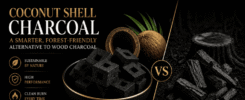
STOP BUYING CHARCOAL! Until you know where it comes from.
The question isn’t whether you should buy charcoal.
The real question is:
Which charcoal are you buying?
Every Piece Has a Story
Pick up a single piece of charcoal. It looks simple enough — black, dense, ready to burn.
But every piece has an origin. Some come from wood. Some come from coconut shells. And it turns out, those stories are far from the same.
Two Sources, Two Different Paths
On one side, there’s traditional wood charcoal. Its story starts with cutting down trees.
On the other, there’s coconut shell charcoal. Its story starts with something that already exists — an agricultural by-product that’s often overlooked, sometimes even treated as waste.
One path means taking from nature. The other means giving new value to something that would otherwise be discarded.
From By-Product to Reliable Energy
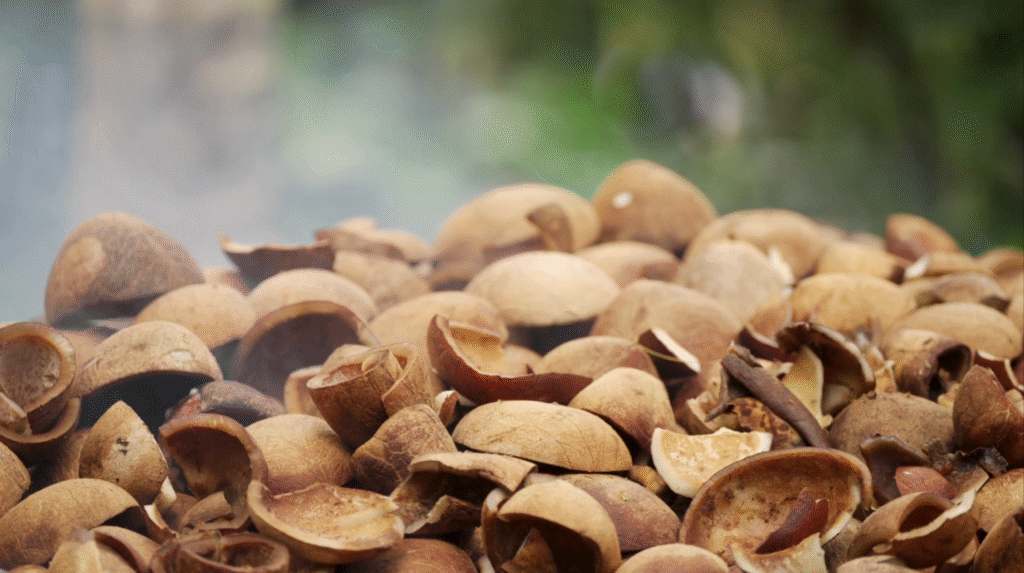
Coconut shells are ground. Mixed. Pressed. Dried.
This process turns an agricultural by-product — once left to pile up or simply burned off — into a dependable energy source, with steadier heat and a longer burn time.
It’s not just about the raw material. It’s about how one production decision can turn something overlooked into something valuable.
Why It Matters
The impact of this choice reaches far beyond the glow of the coal itself:
- Better resource utilization — processing agricultural residue instead of cutting down new trees
- Local jobs — from farmers and shell collectors to factory workers
- Global markets — locally made products shipped worldwide
- Smarter production — a measured, controlled process, not just burning wood at random
One decision about raw material ends up affecting far more than most people think about when they’re lighting up a grill or a shisha bowl.
One Question Before You Buy
Before you check out on your next bag of charcoal, ask one simple question:
“Where did this come from?”
The answer determines a lot — how the coal burns, how long it lasts, how much ash it leaves behind, and its impact on the environment.
Don’t Stop Buying Charcoal. Stop Buying the Wrong One.
Charcoal isn’t going anywhere — it’s still needed for BBQs, shisha lounges, and industrial use. What needs to change isn’t the habit. It’s the awareness behind it.
House of Charcoal manufactures coconut shell charcoal briquettes directly from our own factory — not a broker, not a trading company — with ash content under 2%, fixed carbon around 84%, and a burn time of over 3 hours, backed by KAN-accredited lab certifications.
Because in the end, the right charcoal isn’t just about the fire. It’s about where that fire came from.
House of Charcoal — Premium Coconut Shell Charcoal Briquettes, Bogor, Indonesia.